In an era defined by escalating waste generation and the urgent need for circular economy solutions, pyrolysis technology has emerged as a transformative force. Converting discarded tyres and plastics into valuable commodities like fuel oil, carbon black, and steel wire is no longer a distant vision — it is a profitable and environmentally sound reality. For entrepreneurs and investors, understanding the technical and financial landscape is paramount. This article explores the core elements of establishing a successful pyrolysis operation, offering detailed insights derived from industry benchmarks and feasibility studies.
1. Feasibility and Financial Metrics: The Tyre Pyrolysis Plant Project Report
Before breaking ground, any prudent investor seeks a robust framework that outlines capital expenditure, operational costs, revenue streams, and payback periods. A meticulously prepared tyre pyrolysis plant project report serves as that blueprint. It typically begins with feedstock analysis — assessing the availability and quality of end-of-life tyres in the target region. The document then details the machinery specifications, including reactor size, batch or continuous operation mode, and emission control systems. Financial modelling within the report will project cash flows based on oil yield (usually 35–45% from tyres), carbon black prices, and scrap steel value. Crucially, it also covers site requirements, utility consumption (water, electricity, fuel), and labour needs. Lenders and partners rely on such reports to validate the venture’s sustainability and profitability, transforming conceptual ideas into bankable projects. Understanding these granular details mitigates risks and sets realistic milestones for construction and ramp-up.
2. Adapting the Model for Polymer Waste: Plastic Pyrolysis Plant Project Report
While similar in thermodynamic principle, processing plastic waste introduces distinct challenges and opportunities compared to tyres. Mixed plastics, particularly those containing PVC or PET, require careful pre-treatment to avoid corrosive by-products and ensure consistent oil quality. A dedicated plastic pyrolysis plant project report addresses these nuances head-on. It emphasizes feedstock sorting and washing systems, catalyst selection to optimize diesel-range output, and reactor designs that accommodate the lower melting points of plastics. From a commercial perspective, the report highlights that plastic-derived oil often commands a premium due to its higher calorific value and lower sulphur content. Furthermore, the by-product — hydrocarbon gas — can be recycled to heat the reactor, improving energy autonomy. Investors use this report to compare yield scenarios (often 40–75% oil depending on plastic type) and evaluate environmental compliance, particularly regarding dioxin prevention. It is an indispensable tool for tailoring the plant to local plastic waste streams and end-market specifications.
3. Core Technology and Operational Dynamics of a Pyrolysis Machine
At the heart of every successful recycling installation lies the primary equipment: the reactor and its integrated systems. A modern pyrolysis machine is far more than a heated vessel; it is a sophisticated assembly of feeding mechanisms, high-temperature rotating reactors (typically 350–500°C), condensing towers, and safe discharge units for solids. The machine’s efficiency dictates the entire plant’s economics. Advanced models feature automatic slag removal, which minimizes downtime, and multi-stage cooling to maximize condensate recovery. Safety is paramount: pressure sensors, temperature controls, and explosion-proof seals are standard in reputable configurations. Additionally, the machine’s environmental footprint is mitigated by dedicated gas cleaning systems — such as ceramic ring filters and spray scrubbers — that neutralize particulates and acid gases before emission. When evaluating suppliers, operators examine the metallurgy of the reactor (stainless steel or boiler plate) and the automation level, as these directly influence maintenance intervals and overall equipment effectiveness (OEE). Choosing the right machine is synonymous with choosing long-term reliability and regulatory peace of mind.
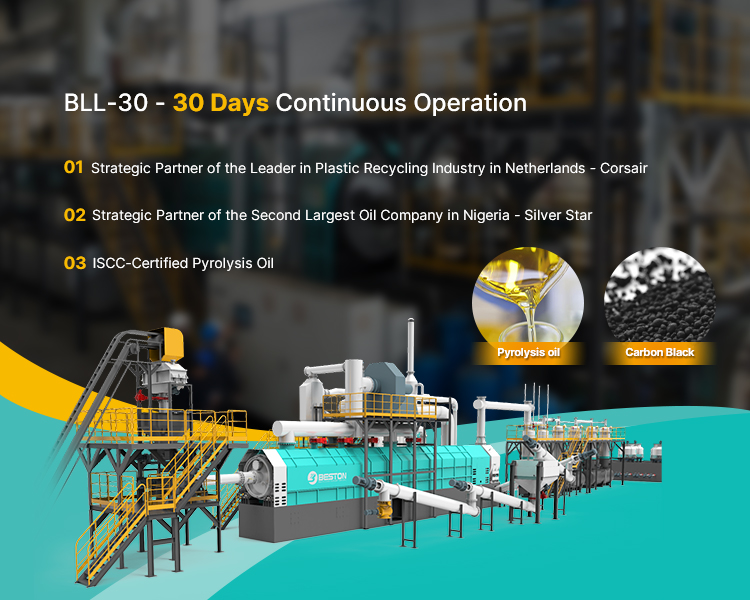
4. Strategic Partnership and Industry Leadership
Navigating the complexities of project implementation, from land acquisition to final commissioning, often requires a partner with deep domain expertise and global reach. Collaborating with an established manufacturer provides access to proven technology, turnkey installation services, and after-sales support. Companies that have delivered hundreds of units across continents understand regional regulatory frameworks and can customize solutions accordingly. One such entity, Beston Group Co., Ltd., has solidified its reputation by offering comprehensive solutions that span the entire project lifecycle. Their involvement typically includes raw material testing, process design, on-site assembly supervision, and operator training. This holistic approach ensures that the pyrolysis machine integrates seamlessly with upstream waste collection and downstream product offtake. For entrepreneurs, aligning with a partner of this caliber reduces technological risk and accelerates the learning curve, allowing them to focus on business development and feedstock logistics while the equipment performs at peak efficiency.
Conclusion: Turning Waste Streams into Value Streams
The journey from waste tyre and plastic piles to profitable commodities is paved with diligent planning, robust technology, and strategic partnerships. The foundational documents — whether a tyre pyrolysis plant project report or a plastic-focused counterpart — provide the critical roadmap that aligns financial expectations with technical realities. Selecting a high-performance pyrolysis machine ensures operational continuity and environmental compliance, while teaming with an industry leader like Beston Group Co., Ltd. offers the backing needed to navigate market fluctuations. As global policies tighten around landfill diversion and renewable fuels, the pyrolysis sector stands ready for exponential growth. For those prepared to invest in thorough preparation and quality equipment, the returns — both financial and ecological — are substantial and enduring.