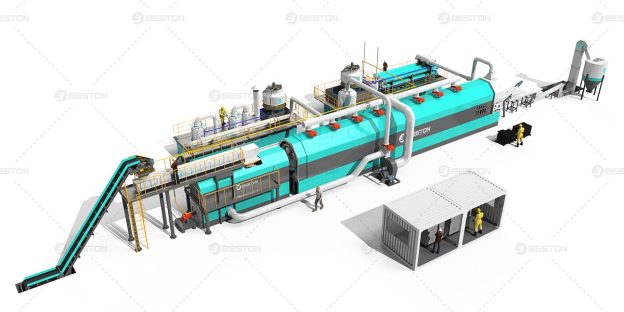
A tyre pyrolysis plant converts end-of-life tyres into several commercially useful products through thermal decomposition in an oxygen-deficient environment. Instead of simply treating waste tyres as an environmental burden, pyrolysis machinery separates their embedded hydrocarbons, carbonaceous material, and metallic components into recoverable resources.
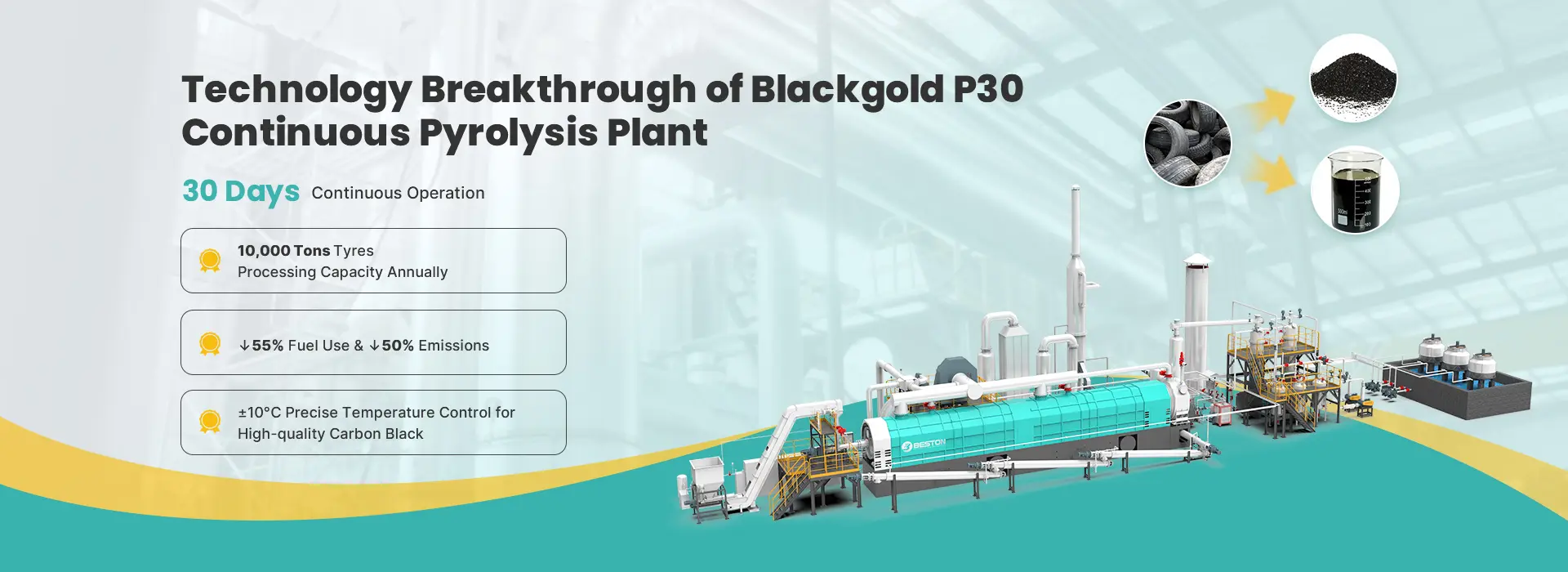
The principal outputs are pyrolysis oil, carbon black, steel wire, and combustible pyrolysis gas. Each has a different downstream application, which makes tyre pyrolysis particularly relevant to resource recovery and circular-economy projects.
1. Pyrolysis Oil
Pyrolysis oil is generally the most economically significant liquid product generated by a tyre pyrolysis process. During heating, the rubber and polymeric fractions of the tyre undergo thermal cracking, producing condensable hydrocarbon vapors that are subsequently cooled into liquid oil.
The resulting oil can be used as an industrial heating fuel for boilers, furnaces, dryers, and certain thermal processing systems. After further refining or distillation, its fractions may also be upgraded for applications requiring more specific fuel characteristics.
A waste tyre to oil plant is therefore attractive where industrial facilities have a steady demand for thermal energy. Rather than purchasing all fuel externally, operators can potentially use part of the recovered oil within the pyrolysis system itself or sell the surplus to suitable industrial users, subject to local fuel regulations and quality requirements.
2. Carbon Black
Another important output from tyre pyrolysis plant is recovered carbon black, often abbreviated as rCB. It originates primarily from the carbonaceous fillers already incorporated into tyre rubber.
Its applications depend heavily on its purity, particle characteristics, ash content, and post-treatment. It can be used in rubber products, molded plastic components, coatings, inks, construction materials, and asphalt-related applications. Further processing, such as grinding, classification, activation, or pelletization, can improve its handling characteristics and broaden its potential market.
Although recovered carbon black does not automatically possess the same specifications as virgin carbon black, its utilization can reduce dependence on newly manufactured carbonaceous materials.

3. Steel Wire
Tyres contain substantial quantities of steel reinforcement. After pyrolysis, the steel wire can be separated mechanically from the solid residue.
The recovered steel is a relatively straightforward secondary material. After cleaning and appropriate processing, it can enter metal recycling streams, steelmaking operations, and other applications requiring ferrous scrap.
This recovery pathway is significant because it means the plant does not merely produce fuel. It also recovers a valuable metallic fraction from a complex composite waste product.
4. Pyrolysis Gas
Non-condensable gases are generated alongside oil and solid carbonaceous residue. These gases commonly contain combustible hydrocarbons and can be redirected to the heating system.
In a well-integrated continuous tyre pyrolysis plant, recovered gas can serve as an internal energy source after appropriate gas handling and combustion controls. This reduces reliance on external fuel and improves overall thermal integration.
Some systems can therefore establish a partially self-sustaining energy loop: tyres provide the feedstock, pyrolysis generates combustible gas, and the gas supplies heat for continued processing.
5. Why Product Separation Matters
The commercial value of a tyre pyrolysis project depends not only on the quantity of products produced but also on their quality, consistency, and downstream usability. Feedstock composition, reactor temperature, residence time, condensation efficiency, and product separation technology can all influence the final output.
For this reason, selecting appropriate pyrolysis machinery is crucial. A properly engineered system should integrate feedstock preparation, thermal decomposition, vapor condensation, gas utilization, carbon recovery, and steel separation into a coherent process.
Ultimately, tyre pyrolysis transforms a difficult waste stream into multiple secondary resources. Pyrolysis oil supplies industrial energy, recovered carbon black enters material applications, steel returns to metal recycling, and combustible gas can support the process itself. This multi-output configuration is what gives modern tyre pyrolysis technology its distinctive resource-recovery potential.