Waste plastic, end-of-life tires and other solid residues keep piling up faster than municipalities and recyclers can process them, and investors are looking for treatment routes that are both profitable and permit-friendly. For years, the default answer was batch pyrolysis: load the reactor, heat it, cool it, unload it, and repeat. That cycle works at small scale, but it wastes enormous amounts of thermal energy on repeated heating and cooling, limits daily throughput, and demands a large crew for manual feeding and discharging. Every door opening also releases hot vapors, which is where smoke and odor complaints begin. Labor cost, fuel consumption and unstable emissions all erode margins, and regulators in many regions are tightening limits on particulates, sulfur compounds and volatile organic compounds. At the same time, demand for high-throughput solid waste recycling is rising, driven by extended producer responsibility rules, landfill restrictions and the growing market for pyrolysis oil, carbon black and recovered steel. Engineering contractors now need a design that runs around the clock, keeps emissions predictable and satisfies neighbors and inspectors alike. That is why continuous pyrolysis technology, built around sealed feeding, automated discharge and closed gas loops, has become the reference point for modern plants. This article explains how such a facility achieves smokeless, odor-free and compliant operation.
Sealed Continuous Feeding Removes the Main Source of Smoke
Smoke in a pyrolysis facility rarely comes from the reactor itself. It appears when the system is opened to the atmosphere. A modern pyrolysis plant eliminates those moments with a double-valve or screw-sealed feeder that pushes shredded material into an oxygen-free reactor without ever exposing the chamber to air. Because the reactor never cools between loads, there is no door to open, no pressure swing and no puff of hot vapor at shift change. Residence time is set by rotation speed, so cracking is even and the gas stream stays stable.
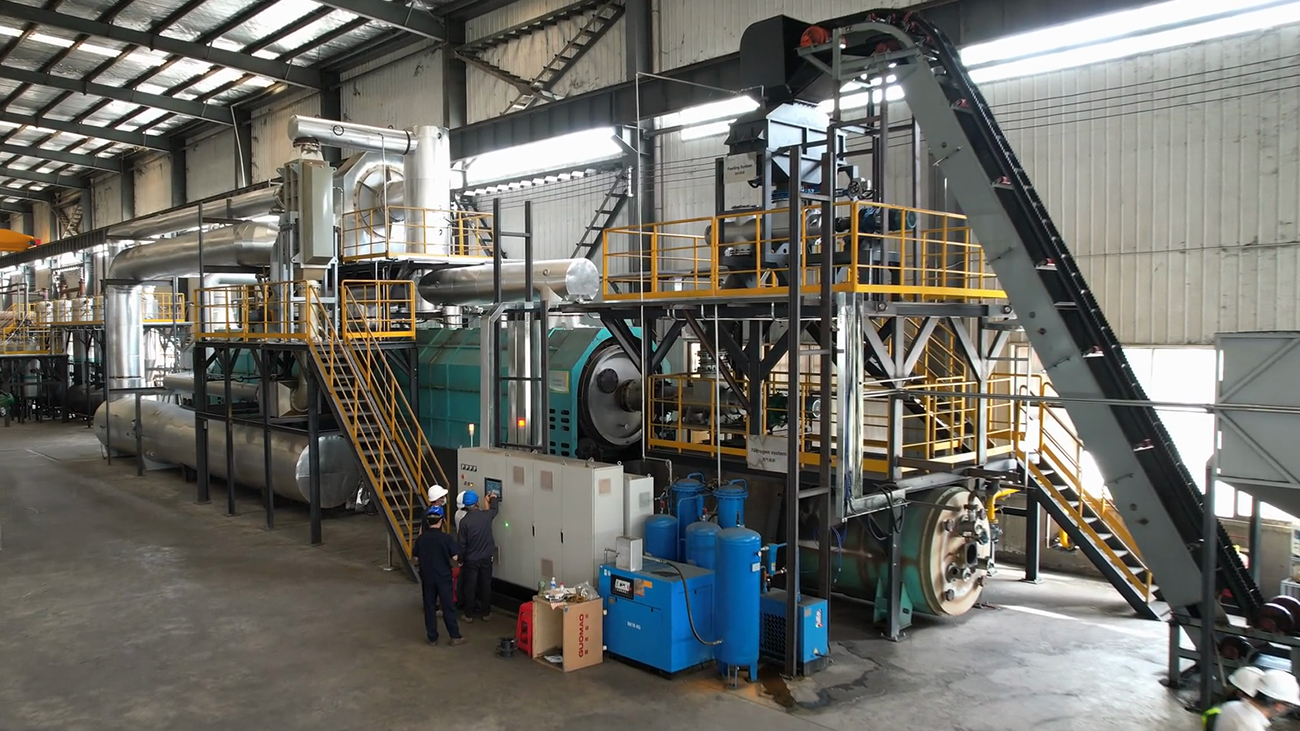
Industrial Blackgold P30 continuous pyrolysis plant site featuring continuous feeding conveyor, high-efficiency horizontal rotary reactor, PLC control cabinet, condensing system, and auto-discharging unit for high-capacity tyre, plastic, and oil sludge chemical recycling.
Closed-Loop Syngas Recycling Turns Emissions into Fuel
The non-condensable gas produced during cracking is not a waste stream; it is a fuel. After the oil fraction is condensed, the remaining syngas is scrubbed, dried and routed back to the burners that heat the reactor. This closed loop cuts external fuel demand sharply and means there is no continuous vent releasing raw gas. Surplus gas is held in a buffer tank and burned in a controlled combustion chamber rather than flared in an unmanaged way, which removes visible smoke and keeps the thermal balance steady.
Multi-Stage Flue Gas Treatment Protects Compliance
Even with syngas recycling, the furnace exhaust must be cleaned. A dependable configuration combines a cyclone or bag filter for dust, a wet scrubber with alkaline dosing for acid gases such as HCl and SO2, and an activated carbon or catalytic stage for residual volatile organics. Sulfur is the special challenge with rubber, so a tire pyrolysis plant normally adds a dedicated desulfurization tower upstream of the stack. Online analyzers for oxygen, particulates, NOx and SO2 feed the control system, so operators see exceedance risk before it becomes a violation.
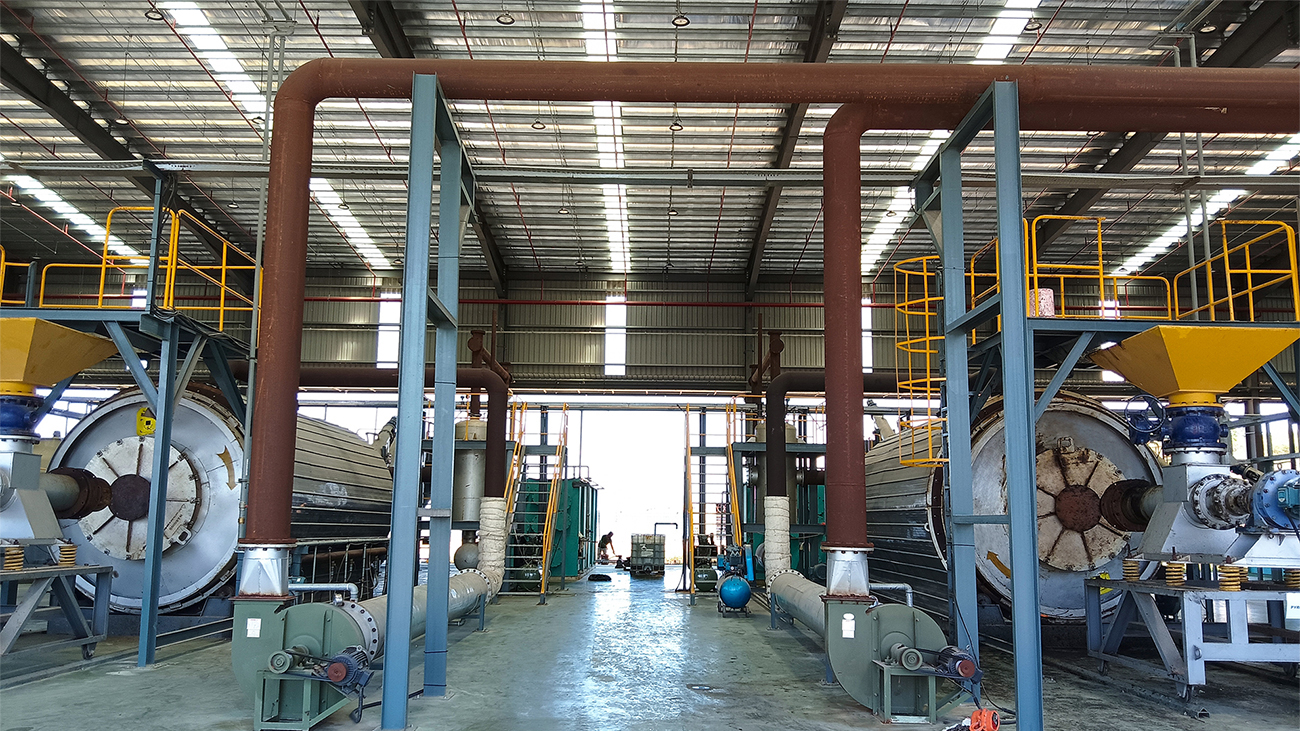
This photo captures a commercial waste tyre pyrolysis plant manufactured by Beston Group, showcasing the feeding system, pyrolysis reactor, and gas condensation system.
Negative Pressure and Sealed Discharge Control Odor
Odor is a fugitive-emission problem. It appears when sulfur-bearing vapors leak from flanges, when hot carbon black meets air, or when oil tanks breathe freely. Operators control it by keeping the whole reactor train at slight negative pressure, so any micro-leak draws air in rather than pushing vapor out. Carbon black leaves through a water-jacketed, sealed screw conveyor that cools it below ignition temperature before it contacts the atmosphere. Oil storage tanks vent through a condensing and carbon-filter line instead of an open breather.
Feedstock preparation matters as well. A plastic pyrolysis plant processing film or mixed packaging benefits from pre-sorting and drying, because moisture and chlorine-bearing polymers raise acid gas and odor loads. Calcium-based additives can capture chlorine early, protecting both the condensing system and the downstream scrubber.
Automation and Monitoring Keep Performance Consistent
Compliance is only credible when it is documented. Leading designs log reactor temperature, pressure, gas flow and stack readings in real time, alarm on drift, and interlock the feeder if a scrubber pump or fan fails. This turns emission control from a manual routine into an automatic safeguard. Investors should ask for test reports from operating references, not only design drawings. Established manufacturers such as Beston Group typically supply the full control system, spare-part support and commissioning guidance, which shortens permitting time and reduces start-up risk.
Practical Checklist for Investors and Contractors
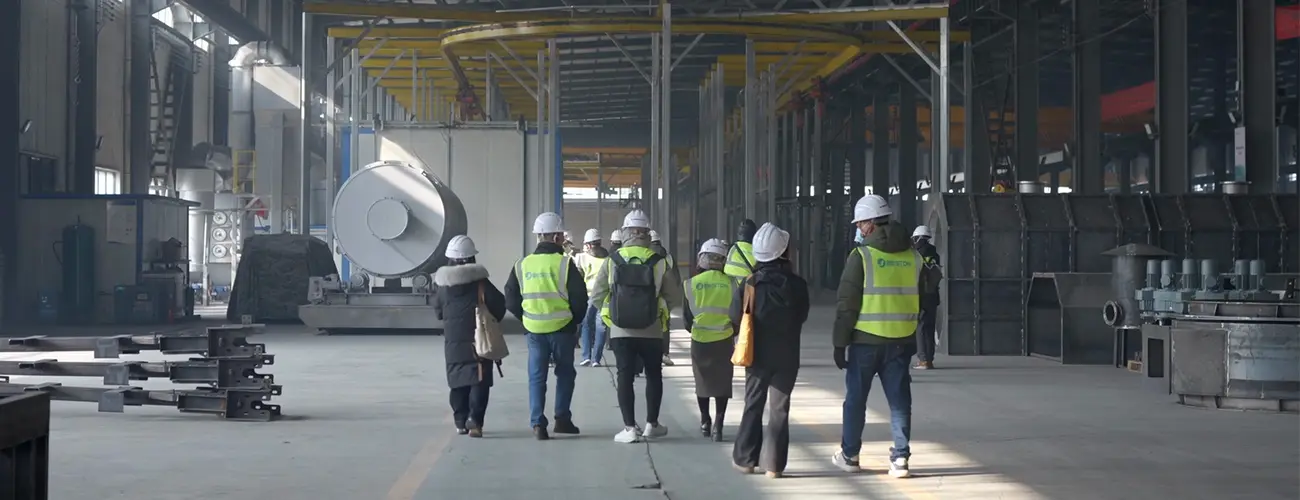
Before committing capital, confirm five points: a sealed continuous feeder, a closed syngas loop, multi-stage flue gas cleaning, negative-pressure discharge and certified online monitoring. A pyrolysis plant that lacks any one of these may pass a short demonstration yet fail under routine inspection. Zero exceedance is not the result of a single device. It is the outcome of integrated engineering, disciplined feedstock control and transparent data, and plants built this way earn community acceptance, stable permits and predictable returns.